These cards summarize the existing study. Open the full study for its argument, sources and qualifications.
Editorial summary · not a quotation
Different baptismal practices
Baptism and Eucharist across Protestant traditions
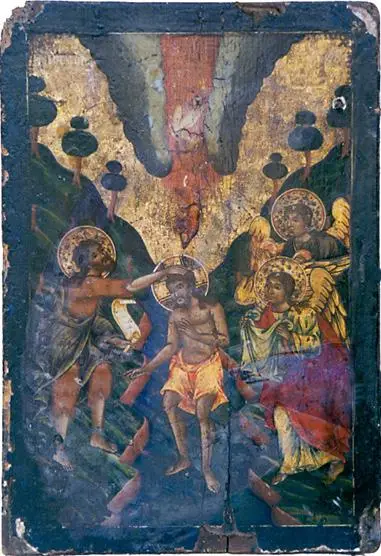
Orthodoxy baptizes infants and normally administers baptism by threefold immersion, followed by chrismation and Communion. Many Lutheran, Reformed, Anglican, and Methodist communities also baptize infants, while many Baptist and Pentecostal communities require a personal profession before baptism. Explanations of the sacrament vary within and between these traditions. Mode of administration is not the only issue: questions include grace, ecclesial incorporation, the relation of faith to reception, and the place of children in the believing community. Avoid reducing every difference to the amount of water used.
Baptism and Eucharist across Protestant traditions
Some Protestant traditions teach a strong real presence; others describe spiritual reception in a different way, and still others emphasize memorial remembrance. It is false to claim that all Protestants regard Communion as merely symbolic. Orthodoxy confesses the true Body and Blood of Christ and receives the Eucharist within the Church’s apostolic, sacramental communion. Compare a community’s actual confession and practice rather than deriving its doctrine from one person’s informal phrase or assuming that all use of the word presence has exactly the same meaning.
Baptism and Eucharist across Protestant traditions
Sacraments express communion, not just private agreement with a general religious idea. An Orthodox person visiting another church should ask their own priest about participation rather than deciding that similar words make all sacramental practices interchangeable. A person exploring Orthodoxy should discuss prior baptism during catechesis; the bishop’s reception discipline matters. These distinctions need not produce contempt. Honest acknowledgment of difference allows respectful conversation while protecting the integrity of Orthodox sacramental life and avoiding invented universal rules about every Protestant baptism.
Orthodoxy baptizes infants and confesses the Eucharist as Christ’s true Body and Blood. Protestant communities differ: some baptize infants, others practice believers’ baptism; some affirm a strong real-presence doctrine, while others emphasize a memorial understanding.
It is inaccurate to claim all Protestants reject sacraments or all regard Communion as merely symbolic.
01Different baptismal practices
Orthodoxy baptizes infants and normally administers baptism by threefold immersion, followed by chrismation and Communion. Many Lutheran, Reformed, Anglican, and Methodist communities also baptize infants, while many Baptist and Pentecostal communities require a personal profession before baptism. Explanations of the sacrament vary within and between these traditions. Mode of administration is not the only issue: questions include grace, ecclesial incorporation, the relation of faith to reception, and the place of children in the believing community. Avoid reducing every difference to the amount of water used.
02Different Eucharistic understandings
Some Protestant traditions teach a strong real presence; others describe spiritual reception in a different way, and still others emphasize memorial remembrance. It is false to claim that all Protestants regard Communion as merely symbolic. Orthodoxy confesses the true Body and Blood of Christ and receives the Eucharist within the Church’s apostolic, sacramental communion. Compare a community’s actual confession and practice rather than deriving its doctrine from one person’s informal phrase or assuming that all use of the word presence has exactly the same meaning.
03Why this matters pastorally
Sacraments express communion, not just private agreement with a general religious idea. An Orthodox person visiting another church should ask their own priest about participation rather than deciding that similar words make all sacramental practices interchangeable. A person exploring Orthodoxy should discuss prior baptism during catechesis; the bishop’s reception discipline matters. These distinctions need not produce contempt. Honest acknowledgment of difference allows respectful conversation while protecting the integrity of Orthodox sacramental life and avoiding invented universal rules about every Protestant baptism.
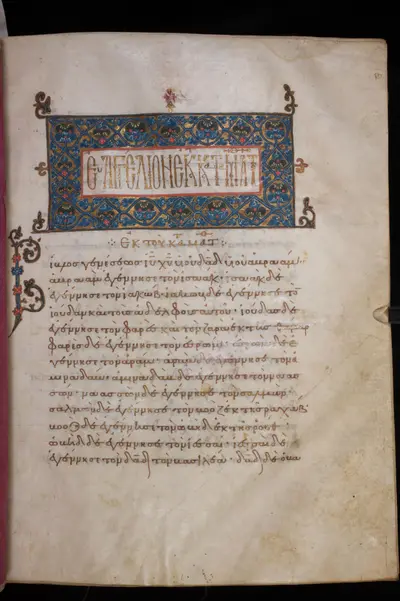
A page of a Greek Byzantine Gospel book, Minuscule 106, Chester Beatty Library W 135, folio 10r. Scripture itself is the shared subject, not a portrait assigned to a modern denomination.