These cards summarize the existing study. Open the full study for its argument, sources and qualifications.
Editorial summary · not a quotation
More than breaking an isolated rule
Sin, the Fall and ancestral sin
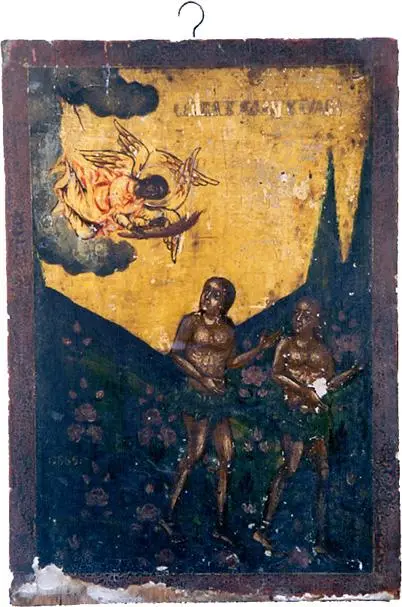
Sin is disobedience and a rupture of communion with God and neighbor. It also disorders desire, damages relationships, and subjects human life to corruption and death. Orthodox teaching takes personal wrongdoing seriously without reducing salvation to bookkeeping. The Fall describes humanity’s turning away from the source of life. Evil is not a substance that God created or a second ultimate power. Repentance is therefore both acknowledgment of actual wrong and a return toward the healing God gives in Christ.
Romans 5 joins Adam, sin, death, and Christ’s saving obedience. Human beings are born into a fallen condition they did not individually choose, and none can heal it independently. This should not be confused with saying that a newborn personally performed Adam’s act. Orthodox catechisms and Fathers use different vocabulary concerning inherited sin, guilt, and liability, so simplistic claims that every Orthodox author means exactly the same thing are misleading. The need for baptism and Christ’s salvation remains real; infants are not treated as autonomous beings who have no need of grace.
A thought that arises involuntarily is not the same as willingly embracing or acting upon it. Ascetical teaching distinguishes temptation from consent, and a confessor considers intention, circumstances, and the person’s needs. Anxiety or intrusive thoughts should not automatically be classified as deliberate blasphemy. The aim is repentance without despair, not obsessive self-surveillance. The Church’s spiritual care can accompany professional mental-health treatment. Recognizing a common fallen condition should encourage humility and compassion, never blaming a particular sick person for everyone’s mortality.
Sin wounds our communion with God and one another. Humanity inherits the fallen condition, including death and corruption, and needs healing in Christ. A descendant is not personally responsible for having chosen Adam’s particular act.
Orthodox authors use differing language about inherited sin, liability and guilt. Do not reduce the tradition to a simplistic opposition between an entirely innocent human condition and personal blame for Adam’s action.
01More than breaking an isolated rule
Sin is disobedience and a rupture of communion with God and neighbor. It also disorders desire, damages relationships, and subjects human life to corruption and death. Orthodox teaching takes personal wrongdoing seriously without reducing salvation to bookkeeping. The Fall describes humanity’s turning away from the source of life. Evil is not a substance that God created or a second ultimate power. Repentance is therefore both acknowledgment of actual wrong and a return toward the healing God gives in Christ.
02Inherited condition and personal responsibility
Romans 5 joins Adam, sin, death, and Christ’s saving obedience. Human beings are born into a fallen condition they did not individually choose, and none can heal it independently. This should not be confused with saying that a newborn personally performed Adam’s act. Orthodox catechisms and Fathers use different vocabulary concerning inherited sin, guilt, and liability, so simplistic claims that every Orthodox author means exactly the same thing are misleading. The need for baptism and Christ’s salvation remains real; infants are not treated as autonomous beings who have no need of grace.
03Temptation, consent, and pastoral care
A thought that arises involuntarily is not the same as willingly embracing or acting upon it. Ascetical teaching distinguishes temptation from consent, and a confessor considers intention, circumstances, and the person’s needs. Anxiety or intrusive thoughts should not automatically be classified as deliberate blasphemy. The aim is repentance without despair, not obsessive self-surveillance. The Church’s spiritual care can accompany professional mental-health treatment. Recognizing a common fallen condition should encourage humility and compassion, never blaming a particular sick person for everyone’s mortality.
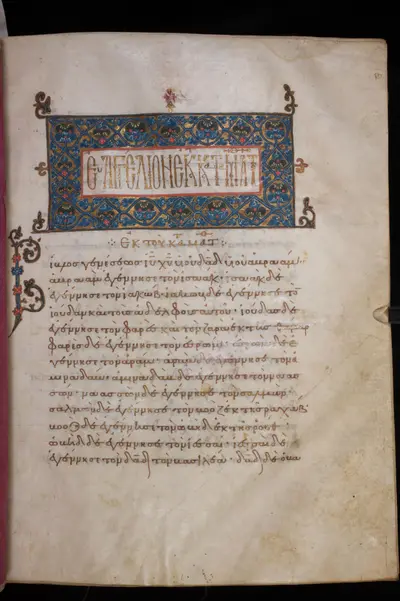
A page of a Greek Byzantine Gospel book, Minuscule 106, Chester Beatty Library W 135, folio 10r. Scripture itself is the shared subject, not a portrait assigned to a modern denomination.